Newsletter Subscribe
Enter your email address below and subscribe to our newsletter

 ByJohn A
Artificial intelligence is reshaping public transportation through data-driven decision support, predictive maintenance, and optimized scheduling. It promises measurable gains in reliability, safety, and rider experience while challenging governance, privacy, and accountability frameworks. Transparent metrics, auditable systems, and interoperable standards are essential to build trust. As agencies pursue scalable analytics and proactive service adjustments, the balance between rider autonomy and innovation will determine future efficiency and resilience, inviting stakeholders to weigh policy levers and implementation pathways.
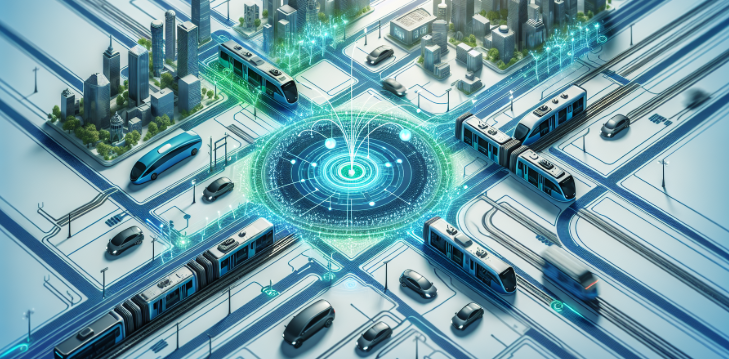
AI currently reshapes public transit by enhancing reliability, efficiency, and rider experience through data-driven monitoring and decision support. The approach emphasizes autonomous buses and optimized scheduling, supported by fare collection analytics to improve revenue integrity and user convenience. Policy makers gain insights on funding, equity, and interoperability, directing investments toward scalable, privacy-preserving systems while preserving freedom to choose efficient mobility options.
See also: kronosshort
Public transportation systems increasingly rely on AI-driven reliability and safety solutions to reduce delays, prevent incidents, and protect riders.
AI enables predictive maintenance and incident forecasting by monitoring assets, predicting faults, and triggering proactive interventions.
Data-driven governance supports transparent risk assessment, operational standardization, and targeted resource deployment, aligning policy goals with rider autonomy, resilience, and continuous safety improvements for future networks.
From data-driven reliability and safety practices, the focus shifts to how riders experience and how operations are managed in real time.
Data governance structures underpin transparent decision-making, ensuring accountability while performance dashboards inform policy refinements.
Rider privacy protections accompany continuous monitoring, enabling proactive service adjustments without compromising trust.
This trajectory champions freedom through efficient, equitable, and auditable transit governance.
The analysis emphasizes transparent governance, principled experimentation, and scalable deployment.
It prioritizes user centered analytics, measurable safety and efficiency gains, and continuous evaluation.
Decisions balance innovation with accountability, ensuring adaptable systems that respect privacy and sustain public trust.
The long term cost for transit agencies hinges on sustained investment in data infrastructure, talent, and cybersecurity, with risk management layers growing proportionally; projected savings arise from efficiency gains, while ongoing funding must cover maintenance, updates, and governance.
Juxtaposition frames transformation: AI can reallocate roles while elevating planning rigor, yet job displacement risks persist. The analysis emphasizes AI ethics and data governance as core, data-driven, policy-focused pillars guiding workforce transitions and freedom-friendly workforce strategies.
Data-driven analysis identifies privacy concerns and security risks in AI-enabled transit, including surveillance exposure and data breaches. Policies should emphasize data minimization, robust governance, transparency, and continuous risk assessment to balance innovation with individual freedoms.
AI can enhance equitable access for underserved riders by optimizing service areas, schedules, and pricing, while preserving privacy; data-driven models forecast demand, inform policy, and expand transparency, enabling freedom to mobility without disproportionate burden on marginalized communities.
A 42% cost variance signals governance gaps; AI governance and accountability are addressed through formal oversight, transparent budgeting, and ethical frameworks. Budget forecasting and data governance guide procurement, risk assessment, and performance metrics, aligning transit innovation with accountable, data-driven policy.
Artificial intelligence is reshaping public transit by enabling predictive maintenance, demand-responsive scheduling, and real-time safety monitoring. Data-driven insights reduce delays, lower costs, and improve rider trust through transparent governance and privacy protections. A compelling metric shows that AI-optimized operations can boost on-time performance by up to 15–25% in densely populated networks, while also lowering unscheduled outages. As systems scale, interoperable analytics and auditable AI will guide policy refinements, ensuring equitable, resilient, and rider-centered transit for the future.