Newsletter Subscribe
Enter your email address below and subscribe to our newsletter

 ByJohn A
Many large home temples start life as small designs stretched to fit a bigger wall. At that scale the pillars look spindly and the carving spreads thin across wide, empty surfaces. A big marble temple for the home comes out far stronger when the marble is treated as architecture from the very first sketch, not added as a finish.
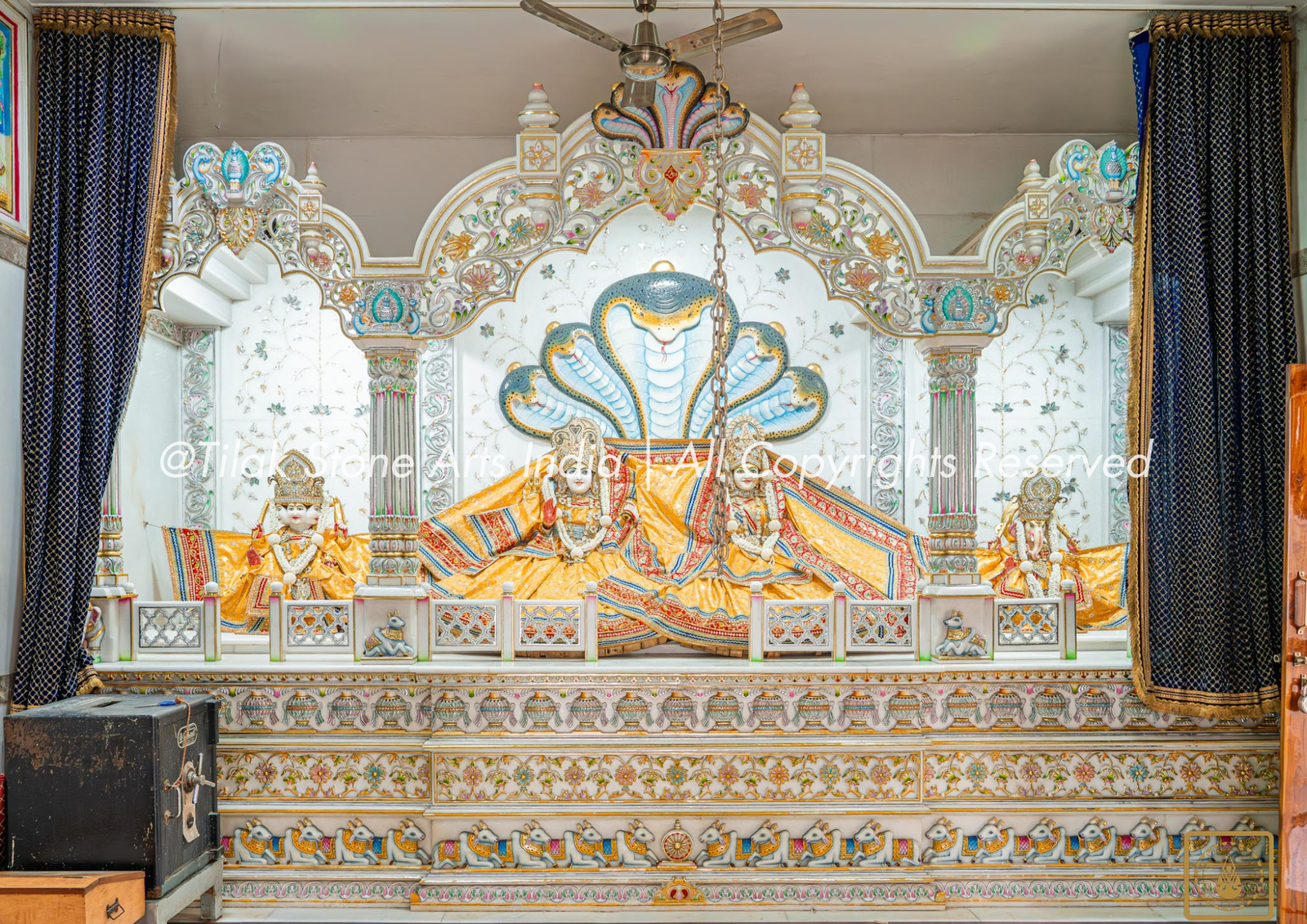
A well-designed big marble temple for home uses the stone to build structure and rhythm rather than decoration alone. Pillars set a steady beat across the front, and arches frame each deity in turn. Carved in white Vietnam marble and planned as one composition, the temple reads as a small building within the house.
Proportions That Break when Stretched: Enlarging a small temple design rarely works, because pillar thickness and arch curves are proportioned for one size only. Mandir designers regularly review scaled-up pieces where the pillars look thin as sticks and a lone lotus floats in a wide blank panel. Stretching the drawing does not stretch the design. The balance has to be rebuilt.
Weight and Timing Owners Overlook: A big marble temple is heavy enough that the floor slab should be checked by a structural engineer before the design is finalised, particularly on upper floors. Once flooring is laid and the false ceiling is fixed, reinforcing anything becomes disruptive. Leaving the temple until last can quietly cap its height and size.
See also: How Healthy Home Habits Can Shape a Child’s Future
Pillars and Arches That Pace the Eye: In a big marble temple, pillars and arches set the visual rhythm, guiding the eye from one deity to the next. A wider central arch flanked by narrower ones makes the main deity the focal point of the room. At this scale, pillar bases and capitals become features in their own right, so their mouldings need real thought.
Carved Surfaces and Motifs Sized for Distance: Motifs on a large temple need to be carved bigger and deeper, because people see them from across the room rather than up close. Angled ambient lighting from above helps as well, since shadow is what makes relief readable. Good carvers set busy panels beside plain ones, so the eye finds somewhere to rest.
Platforms That Lift the Whole Composition: A raised marble platform gives a big temple its footing, lifting the idols to a comfortable viewing height and setting the sacred space apart from the floor. Shallow steps make daily access easy. The front ledge needs enough depth for a thali and flowers. Leave the open floor in front too, since the whole family may gather there for evening aarti.
The Layered Traditional Temple: A highly detailed traditional temple creates a rich, layered effect, and dense relief on the pillars and panels. It suits heritage homes and dedicated pooja rooms well. The trade-offs are time and upkeep. Deep carving takes longer to produce, and its recesses collect dust that a cloth alone will not reach.
The Cleaner Contemporary Interpretation: A contemporary big marble temple for home relies on proportion and broad plain surfaces, letting the stone itself carry the look. It sits comfortably in modern interiors and cleans in minutes. It is also less forgiving. With little ornament to distract, a joint slightly out of line or an uneven patch of tone shows straight away.
Choosing Stone That Holds Up at Scale: White Vietnam marble works well for large temples because its even white tone stays consistent across the many blocks a big piece needs. Block selection happens alongside design, so the calmest slabs go to the broad front surfaces. Carvers then read the grain of each block by eye and hand before cutting the deeper relief.
Joints Planned along Architectural Lines: Artisans build large marble temples in sections, and a well-planned design hides each joint along a moulding or a pillar edge. A 3D visualisation lets the family check proportions and joint positions before carving begins. A custom big marble temple for home designed this way looks like one solid structure once installed.
Durability That Justifies the Scale: A large marble temple is a long-term investment, since natural marble does not warp or rot the way timber can. Sectional construction adds another advantage. If one panel is ever chipped, that section can be remade and swapped rather than replacing the whole temple. Periodic resealing helps the surface resist diya oil for years.
Checks before Committing to a Large Design: A handful of structural and design checks protects a large temple far better than any finish applied later. Each is quick to settle on paper and costly to fix in stone. Anyone commissioning a big marble temple for home can expect a careful designer to go through them early, well before the first block is cut.
A temple designed as architecture gives a large room a true centre and the family a place that feels built for worship. Leaving the design until the floors and ceilings are finished can limit its height and scale. Book a design consultation and share your room plan early, so the structure and the marble can be developed together.