Newsletter Subscribe
Enter your email address below and subscribe to our newsletter

 ByJohn A
Medical office and clinic improvement projects can create the same construction debris found in other commercial renovations, but the setting requires more careful planning. Contractors may be removing flooring, drywall, ceiling tile, cabinetry, doors, casework, countertops, fixtures, partitions, reception areas, exam-room components, and packaging while working around occupied spaces, patient access, building management, and other tenants.
Commercial dumpster planning helps keep renovation debris contained and prevents waste from spreading into areas that need to remain clean and accessible. In a medical setting, that separation is especially important. Contractors need a clear plan for placement, debris routes, service timing, staging, and material handling so construction waste does not interfere with clinic operations or the next phase of work.
Before scheduling a dumpster, contractors should review the full renovation scope. A minor reception-area refresh creates different debris than a complete clinic reconfiguration involving exam rooms, offices, restrooms, flooring, ceilings, cabinetry, and mechanical or electrical work.
The scope should identify which areas will be renovated, what materials will be removed, and whether the clinic will remain partially open. Contractors should also determine whether work will happen in one continuous phase or move through the building room by room.
Understanding the project sequence makes it easier to match dumpster placement and service timing to the actual volume of debris.
This is one of the most important distinctions on a medical property. A construction dumpster is intended for approved renovation debris, not regulated medical waste, sharps, medications, biohazard materials, or other waste requiring specialized handling.
Before demolition begins, contractors should coordinate with the clinic or property manager so those materials are removed from active renovation areas. Existing sharps containers, medical supplies, laboratory materials, pharmaceuticals, and other regulated items should remain under the control of the appropriate medical waste process.
Keeping these waste streams separate helps construction crews focus on the debris they are equipped to manage.
Medical office renovations often involve several layers of oversight. The contractor may need to coordinate with clinic administrators, property managers, building engineers, landlords, security teams, and neighboring tenants before dumpster delivery.
Working with Waste Removal USA can help commercial contractors coordinate dumpster placement and service around renovation schedules and property access requirements. The container should support the project without interfering with patient entrances, ambulance or emergency access, accessible parking, deliveries, or shared building operations.
Early coordination helps prevent placement problems after construction has already started.
If the clinic remains open during construction, access becomes a major part of the waste plan. Patients may include older adults, children, people using wheelchairs or mobility aids, and individuals who should not have to navigate construction debris or loading activity.
Contractors should keep debris routes away from patient entrances, waiting areas, treatment spaces, and main corridors whenever possible. If construction materials must pass through shared areas, movement should be scheduled during lower-traffic periods.
Temporary barriers, signage, and clear walkways help keep the construction zone separate from clinic operations.
Most medical office debris will not move directly from the renovation area to the dumpster. It may pass through back corridors, service elevators, stairwells, loading docks, rear exits, or shared commercial spaces.
Contractors should identify these routes before demolition begins. Floors, door frames, walls, elevators, and corners may need protection when crews are carrying cabinets, drywall, flooring, countertops, or other bulky materials.
The route should remain as short and controlled as practical. Loose debris should not be staged in corridors while crews wait for an opportunity to move it outside.
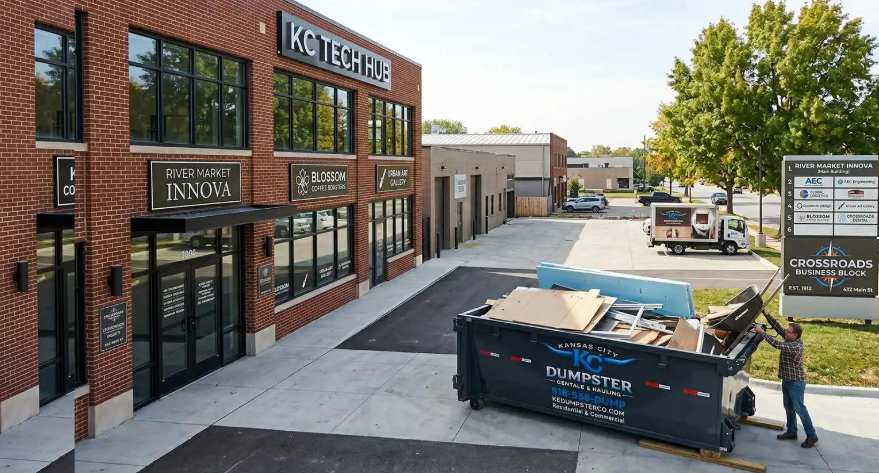
Medical office properties often have limited exterior space. Parking areas may already be heavily used by patients and staff, while loading zones, fire lanes, and accessible routes need to remain open. The dumpster may need to sit near a rear service entrance, loading area, alley, or designated construction zone.
Placement should work for both daily loading and service truck access. Contractors should avoid locations that block clinic signage, patient visibility, utility access, emergency routes, or neighboring businesses.
A slightly longer debris route may be preferable to a dumpster location that creates daily access problems.
Medical offices often contain substantial built-in cabinetry and casework. Exam rooms, laboratories, nurse stations, reception areas, supply rooms, and administrative spaces may include counters, shelving, doors, drawers, sinks, and storage systems that become bulky renovation debris.
These items can fill a dumpster quickly if they are loaded intact. Contractors should break down approved materials when practical and safe. Long panels, doors, and cabinet sections should be loaded in a way that uses space efficiently.
Bulky debris planning helps prevent the container from filling before the main demolition phase is complete.
Some clinic renovation materials can add considerable weight. Tile, stone, plumbing fixtures, dense flooring, plaster, countertops, masonry, wet drywall, and other heavy materials may create load concerns before the dumpster appears full.
Contractors should identify dense debris during the preconstruction review. Restroom renovations, lobby upgrades, exterior masonry work, or older building materials may create especially heavy loads.
Monitoring both weight and visible volume helps contractors determine when service should be scheduled.
A medical office renovation may be only one project happening within a larger commercial property. Other tenants may be remodeling, common areas may be under construction, or building systems may be undergoing upgrades. That makes broader waste management in commercial real estate relevant to the dumpster plan.
Contractors should determine which loading docks, service entrances, waste areas, and access roads are shared. The clinic project should not assume exclusive use of areas needed by neighboring tenants or normal building operations.
Building-level coordination reduces conflicts and keeps the renovation from affecting unrelated businesses.
Dumpster service itself can create temporary noise, traffic, and access changes. On an active medical property, contractors should think carefully about when pickups or swaps occur.
Service may be easier during periods of lighter patient traffic, outside the clinic’s busiest hours, or during scheduled construction windows. Building management may also restrict when large trucks can enter loading areas or service lanes.
Coordinating service timing helps reduce disruption and keeps the cleanup schedule predictable.
A dumpster that cannot be serviced can quickly become a renovation bottleneck. Delivery vehicles, contractor trucks, medical supply shipments, pallets, equipment, or temporary storage can block the approach if the service route is not protected.
Commercial contractors should mark or communicate which areas must remain open for pickup. On service days, crews should verify that vehicles and materials have been moved before the truck arrives.
This is particularly important on medical properties where access areas may already be heavily scheduled.
Small debris can be especially problematic around clinics. Screws, ceiling-grid pieces, drywall scraps, flooring fragments, packaging, sawdust, and other materials should not migrate into occupied areas.
Crews should use bags, carts, covered containers, brooms, vacuums, and other appropriate cleanup tools as the renovation progresses. Debris should be moved regularly rather than allowed to pile up inside.
A clean construction boundary helps protect the professional appearance of the clinic and makes it easier to keep active areas separate from renovation work.
Clinic improvement projects often require cabinets, flooring, doors, fixtures, lighting, plumbing components, furniture, equipment, and finish materials to arrive while demolition debris is still leaving.
Contractors should compare the delivery calendar with dumpster service. Major demolition debris should be cleared before large material deliveries whenever possible. New products should not have to be staged beside old flooring, broken drywall, or dismantled cabinetry.
Keeping incoming and outgoing materials separated reduces repeated handling and protects new finishes.
Medical office renovations benefit from frequent site resets. Contractors should plan cleanup checkpoints after demolition, before rough-ins, before inspections, before flooring or ceiling work, before cabinetry installation, and before final equipment or furniture placement.
At each checkpoint, crews should load debris, sweep routes, check the dumpster, remove loose materials, and clear staging areas. This prevents debris from one phase from interfering with the next.
Regular cleanup also makes it easier for project managers and clinic representatives to see progress clearly.
See Also: Print to Order, Not to Cupboard: Rethinking How Many Labels You Actually Need
Final dumpster removal should be coordinated with project closeout. Removing the container too early can leave punch-list debris, packaging, and last-minute scraps without a disposal option. Leaving it too long can interfere with parking, landscaping, patient access, or the clinic’s return to normal operation.
Contractors should schedule the final pickup after the last meaningful debris-producing work but before the property is fully presented for reopening or turnover.
The dumpster area and debris routes should also receive a final cleanup once the container is gone.
One common mistake is treating a clinic like an ordinary vacant office renovation. Another is failing to separate construction waste from regulated medical materials. Contractors should also avoid blocking patient access, accessible parking, service entrances, or medical deliveries with the dumpster or service route.
Waiting until the container is completely full before scheduling service can create another problem. Medical office projects often have limited room for overflow debris, so monitoring capacity matters.
A better approach is to build waste planning into the renovation schedule from the beginning.
Commercial dumpster rentals for medical office and clinic improvement projects require careful coordination between construction logistics and active property needs. Contractors must manage drywall, flooring, cabinetry, fixtures, ceiling materials, packaging, and other renovation debris while protecting patient access, staff movement, building operations, and specialized medical waste processes.
By separating waste streams, choosing appropriate placement, planning controlled debris routes, coordinating with building management, scheduling service carefully, and using cleanup checkpoints between phases, commercial contractors can keep medical office renovations cleaner and more organized. A strong dumpster strategy allows construction debris to leave the property efficiently without creating unnecessary disruption for the clinic or the people who use it.